How much does a canal cruise cost in Amsterdam?
A clear breakdown of Amsterdam canal cruise prices, from budget one-hour sightseeing boats to dinner cruises, with honest advice on what you actually get for the money.
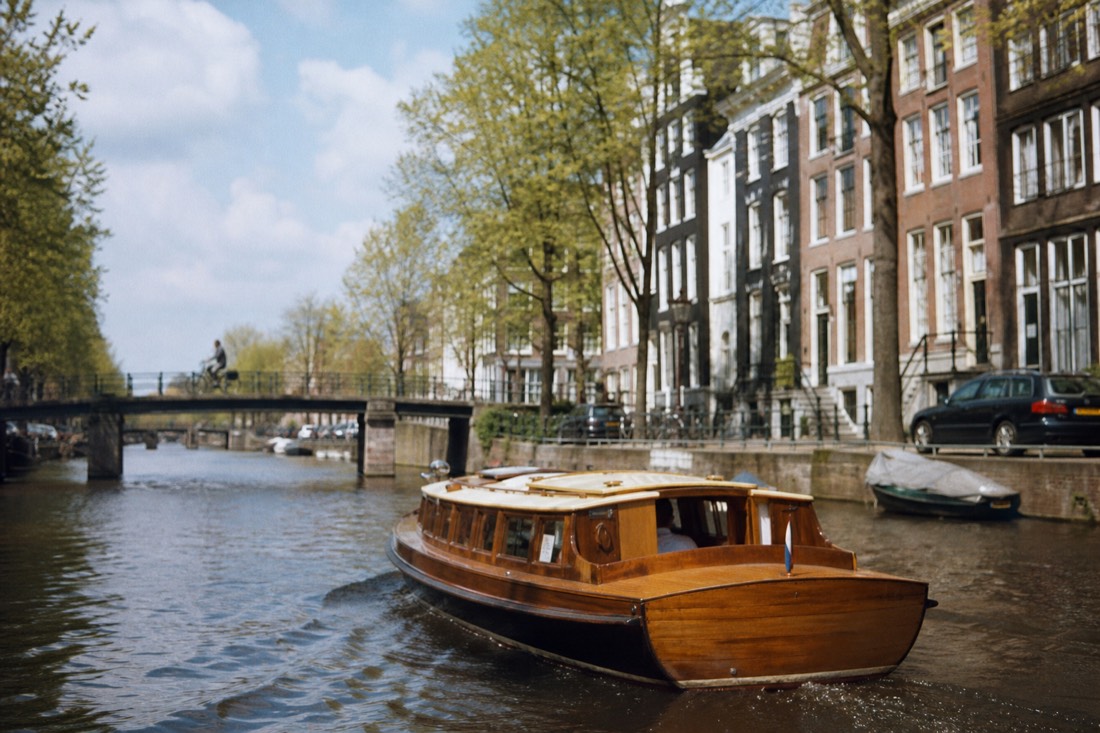
A one-hour boat ride through a UNESCO World Heritage canal ring is the single most popular tourist activity in Amsterdam, and it is also the one people most often overpay for without realizing it. The same stretch of water, the same 17th-century facades, the same low bridges, can cost wildly different amounts depending on choices that are not always obvious at the ticket counter. This guide breaks down what Amsterdam canal cruises actually cost, why the prices differ so much, and where the money is well spent.
The canal ring itself was inscribed on the UNESCO World Heritage List in 2010, covering the concentric ring of the Singel, Herengracht, Keizersgracht and Prinsengracht, designed at the end of the 16th century and built during the Dutch Golden Age. That is the product you are buying on every cruise, from the cheapest audio-guide boat to the most expensive dinner service. The scenery does not change. What changes is everything else.
How much does a canal cruise cost in Amsterdam?
Expect to pay roughly $19 to $50 per person (checked September 2026) for a standard sightseeing cruise of one to one and a half hours, a clear step up for a cruise with drinks and snacks included, and a multiple of the sightseeing fare once a full meal or private boat enters the picture. The spread comes down to boat type, what is served, and group size.
Those figures are planning ranges drawn from current market data, not operator promises. Live discovery research on Amsterdam cruise listings in 2026 found typical prices of roughly $19 to $47 for one to one-and-a-half-hour tours, with a second independent pass putting the common band at $20 to $50 (checked September 2026). Dinner and private options command clear premiums, and evening sailings tend to sit at the top of the standard range.
The cheapest tier is the large covered sightseeing boat with a recorded audio guide. These run a fixed loop, seat dozens of people, and depart continuously from central docks. A step up gets you a smaller open boat or a classic saloon vessel, often with a live guide instead of a recording, and that is where the experience improves most per euro spent. Above that come the tasting cruises, where cheese, wine or drinks are included in the fare, and finally the dinner cruises and private charters, where you are paying as much for the kitchen and the intimacy as for the route.
Here is how the main tiers stack up against each other, using real currently-listed products as the reference points:
| Tier | Typical product | What is included | Duration | Rating and reviews (live-listed) |
|---|---|---|---|---|
| Standard sightseeing | 75 Minute City Canal Cruise with Audio Guide (Blue Boat Company) | Covered boat, audio commentary, fixed loop | 75 minutes | 4.4 from 19,764 reviews (checked Sep 2026) |
| Tasting cruise | Classic Saloon Boat Cruise with Cheese & Wine (Flagship Amsterdam) | Small saloon boat, cheese and wine tasting | 1 hour | 4.6 from 26,218 reviews (checked Sep 2026) |
| Casual dinner cruise | The Original Pizza Dinner Cruise with Drinks (Stromma Netherlands) | Pizza dinner with drinks on board | Duration on the listing | 4.5 from 2,642 reviews (checked Sep 2026) |
| High-end dinner cruise | High-End 3-Course Dinner Canal Cruise (Rederij Aemstelland) | Three-course dinner service | 2 hours 15 minutes | 4.6 from 114 reviews (checked Sep 2026) |
Read the table as a ladder, not a ranking. Each step up adds something real: a smaller boat, a live host, food and drink, longer on the water. The ratings barely move between tiers, which tells you the market prices the extras, not the quality. A 4.4 on a big covered boat and a 4.6 on a saloon boat are both satisfied customers buying different products.
One useful way to think about it: the boat and the route are the commodity, and the extras are the margin. If you only care about seeing the canal ring, the commodity is genuinely good value. If you want the evening to feel like an occasion, the extras are what you are buying, and you should judge the price against a restaurant meal plus a cruise, not against a cruise alone.
What makes some canal cruises cost more than others?
The three biggest price drivers are the vessel, the catering, and the group size. A large covered audio-guide boat is the cheapest product on the water; a small open boat with a live guide costs more; adding food, alcohol or a private charter multiplies the fare. Everything else, including time of day and season, nudges the price modestly rather than doubling it.
The vessel matters more than most visitors expect. Amsterdam has roughly 165 canals totalling about 75 km, and the average canal depth is only about 2.6 meters, which constrains what can float on them. Large glass-topped boats carry forty or more passengers and keep per-person costs low. Classic saloon boats, the elegant low wooden vessels you see moored near the Rijksmuseum, carry far fewer people per departure, so the operator's fixed costs spread across fewer fares. Small electric open boats go lower still, often limited to a dozen or so passengers, and that intimacy is priced in.
Catering is the second multiplier. A cruise that serves nothing can sell a seat cheaply. A cruise with unlimited drinks, or a cheese and wine tasting, carries both the cost of the goods and the cost of service staff on board. A three-course dinner cruise essentially runs a kitchen on a moving boat, which is why it costs several times the sightseeing fare. None of this is hidden: the price on the listing tells you what is included, and the difference between tiers almost always maps to what comes out of the galley.
Group size is the third. Some operators run small-group departures capped at a handful of guests with a local guide, and those seats cost more because the boat sails regardless of whether it is full. At the far end, a private charter rents you the entire vessel, and the price is quoted per boat rather than per person, which can actually work out competitively for a family or a group of six to eight friends.
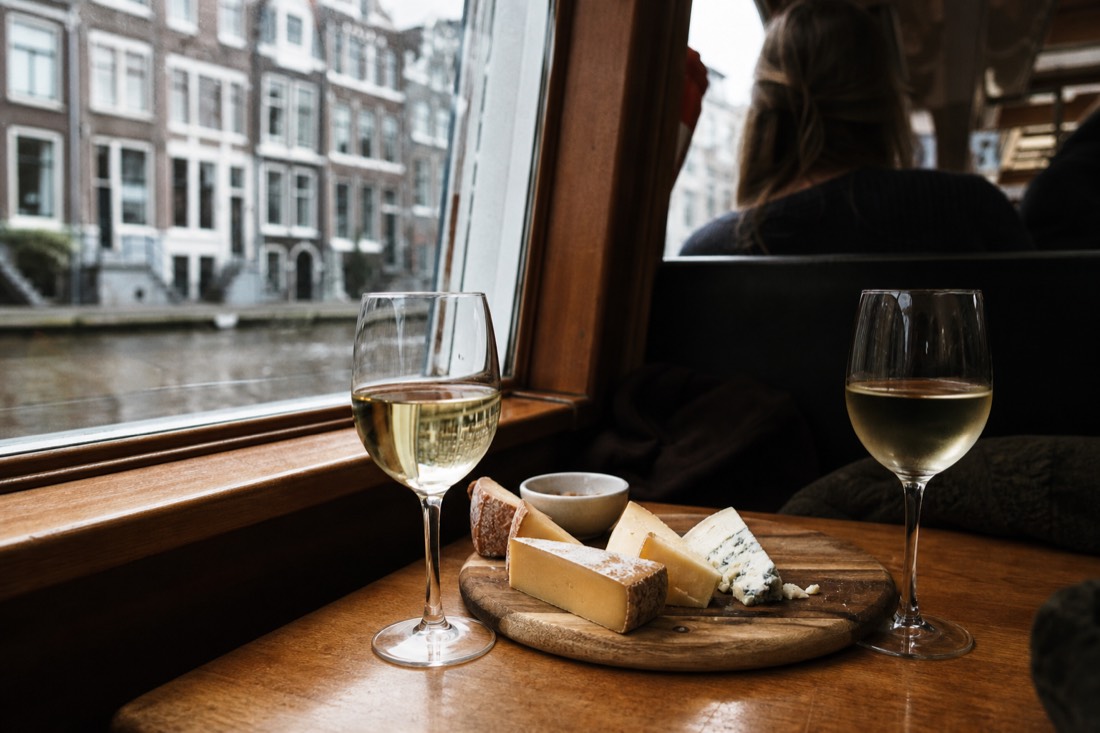
If you are weighing a mid-priced option, a cheese and wine cruise on a classic saloon boat is the tier where the extra spend pays off most clearly: you get the smaller vessel, the included tasting, and the same UNESCO-listed route in one fare. Check availability if that combination fits your evening.
Do dinner cruises and pizza cruises cost more than they are worth?
A dinner cruise in Amsterdam typically costs about the same as a mid-range restaurant meal plus a standard cruise fare combined, so it is worth the price if you would otherwise do both separately, and poor value if you only wanted the boat ride. The pizza cruise is the budget-friendly entry into this tier.
The logic is simple arithmetic. If a standard cruise runs near the bottom of the market band and a decent restaurant dinner in central Amsterdam runs well above that, a combined dinner cruise that lands near the sum of the two is fair. The Original Pizza Dinner Cruise with Drinks, run by Stromma Netherlands, currently holds a 4.5 rating from 2,642 reviews, and sits at the accessible end of the dinner tier. At the other end, the High-End 3-Course Dinner Canal Cruise by Rederij Aemstelland, rated 4.6 (checked September 2026), runs two hours and fifteen minutes and prices accordingly: expect a figure closer to a proper restaurant bill, with the exact fare on the operator's live listing.
What you should not do is buy a dinner cruise for the food alone. You are eating on a moving boat, in a compact galley, on a fixed menu. The value is in the combination: the window table that happens to be the best view in the city, the two-plus hours on the water, and the fact that you never queue for either. People who understand this are almost always the satisfied reviewers. People expecting a fine-dining destination that happens to float are the disappointed ones.
Timing affects this tier more than the sightseeing tier. Sunset and evening departures are the most in-demand slots for dinner and drinks cruises, and live market data notes that evening and dinner options sell particularly well and carry the clearest premiums. If your dates are flexible, a weekday sailing is usually cheaper than the same menu on a Friday or Saturday night.
Are private boat tours worth the extra cost?
A private canal cruise in Amsterdam is worth the premium when you are four or more people, want to set your own route and pace, or are marking an occasion, because the per-boat price divided across a group often lands close to a premium shared tour. For one or two people just wanting the classic experience, it is usually overkill.
Private charters are quoted per boat, typically per hour, and the market research found that private options command the highest premiums in the city, alongside dinner service. The break-even math is what decides it. A charter that feels expensive for two can be reasonable for six, especially once you add up what a couple of premium shared tours with drinks would have cost for the same group.
The other thing you buy with a private tour is control. Shared cruises run fixed loops on fixed schedules. A private captain can slow down at the Reguliersgracht, one of the most photographed multi-bridge views on the canal ring, linger where the light is good, and skip the sections you have already walked. For photographers, families with small children, or anyone who wants an hour that feels like theirs rather than a departure time, that control is the actual product.
That last point matters for pricing more than it first appears. Capacity on the water is regulated, and the most scenic, narrowest stretches cannot absorb unlimited boats. Scarcity at the prettiest hours, sunset in particular, is structural, not seasonal marketing, and it is why the same boat costs more at 8 pm than at 11 am.
How can you pay less for a canal cruise in Amsterdam?
The reliable ways to pay less are booking online in advance instead of at the dock, sailing in the morning or early afternoon rather than at sunset, choosing the large audio-guide boat over a small open boat, and skipping the food and drink tier unless the combined experience is what you wanted anyway.
Booking ahead is the single biggest lever, and not only for the price itself. Walk-up tickets at the central docks are sold at the standard fare with no discount, and popular time slots genuinely fill. If you are planning a trip during tulip season or the summer months, the advice in our piece on whether you need to book in advance covers exactly when the queues start to matter.
The second lever is timing. Sunset departures carry the premium; a late-morning sailing on the same boat is usually the cheapest seat on the water and, honestly, often has better light for photographs anyway. Our guide to the best time of day for a canal cruise goes deeper on how the experience changes hour by hour, and the short version is that the discount hours are not the worst hours.
The third lever is choosing the commodity product deliberately. The 75 Minute City Canal Cruise with Audio Guide by Blue Boat Company, rated 4.4 from 19,764 reviews (checked September 2026), is a good example of the tier: a big covered boat, a fixed route, a recording in your language, and a fare near the bottom of the market band. If your plan is to see the canal ring once, understand the layout, and spend the rest of your budget on museums or food, this tier does the job well.
The fourth lever is honest self-assessment about the extras. A tasting cruise costs more than a sightseeing cruise plus a glass of wine bought separately, sometimes. Sometimes it costs less, because the operator buys wholesale and you are buying retail. Do the comparison for your specific dates rather than assuming either way.
A quick summary of the levers, ranked by how much they actually move the price:
| Money-saving lever | What you give up | Who it suits |
|---|---|---|
| Book online in advance | Nothing, apart from committing to a time slot | Everyone; it also protects you from sold-out departures |
| Sail morning or early afternoon | Sunset light and the evening atmosphere | First-time visitors, photographers, families |
| Choose the large audio-guide boat | Intimacy, live guide, refreshments | Anyone who plans to cruise once and spend elsewhere |
| Skip the tasting or dinner tier | Food and drink on the water | Anyone who would rather eat at a restaurant ashore |
Notice what is not on the list: hunting discount codes. Amsterdam cruise pricing is fairly uniform across the market because the underlying product is licensed and capacity-constrained, so the honest savings come from choosing the right tier and hour, not from coupon hunting an hour before departure.
Is the cheapest canal cruise still a good cruise?
Yes. The budget tier in Amsterdam is unusually strong, because even the cheapest covered boats sail the same protected canal ring as the luxury saloon vessels, with the same bridges, the same gabled facades and the same audio commentary. What you give up is intimacy, flexibility and refreshments, not scenery.
This is the part of Amsterdam pricing that genuinely surprises people who have cruised elsewhere. In many cities the cheap boat is a compromised route. Here, the route is the World Heritage property. The Herengracht was laid out for the wealthiest merchants with wider plots and gardens, the Prinsengracht was the working canal with warehouses along the Jordaan, and the Keizersgracht sat between them, and a ticket at the bottom of the market band passes all three.
What separates the tiers, then, is purely the frame around the view. On the large boats the frame is a glass roof and a recording. On a saloon boat it is varnished wood, a live host, and a glass of wine. On a private charter it is your own schedule. The scenery through the window is identical, and knowing that is the most useful pricing tool in this article: decide what frame you are paying for, and pay only for that.
For a one-off evening that hits the sweet spot between the budget boat and the full dinner service, the Classic Saloon Boat Cruise with Cheese & Wine by Flagship Amsterdam is the option we point most people toward: an hour on an elegant small vessel, a cheese and wine tasting included, a 4.6 rating built on 26,218 reviews (checked September 2026), and a fare that sits far below the dinner tier.
Common questions about canal cruise prices in Amsterdam
A standard Amsterdam canal cruise costs roughly $19 to $50 per person (checked September 2026), with tasting, dinner and private tiers priced as clear steps above that band, and the differences come down to vessel, catering and group size rather than route or scenery. These are planning ranges, so confirm the exact fare on the operator's live listing for your dates. (checked September 2026) (checked September 2026)
How much does a canal cruise cost in Amsterdam?
Plan on roughly $19 to $50 per person for a standard one to one-and-a-half-hour sightseeing cruise, with drinks-and-snacks and dinner tiers priced as clear steps above that band. Exact fares vary by season and time of day, so check the operator's live listing for your dates. (checked September 2026)
Why do some canal cruises in Amsterdam cost so much more than others?
Vessel, catering and group size. A large audio-guide boat is the cheapest product; small open boats and classic saloon vessels carry fewer passengers and cost more per seat; and once food, alcohol or a private charter is included, the fare multiplies because you are paying for service staff and goods on board.
Is a dinner cruise in Amsterdam worth the price?
It is worth it if you would otherwise pay for a restaurant meal and a cruise separately, since the combined fare usually lands near the sum of the two. It is not worth it if you only wanted the boat ride, because the food alone, served from a compact galley on a moving vessel, is not the point.
Can you save money by booking an Amsterdam canal cruise online?
Yes. Booking online in advance locks your time slot and avoids walk-up pricing at the docks, and popular sunset departures genuinely sell out in high season. Morning and early-afternoon sailings are usually the cheapest seats on any given boat.
Is the cheapest Amsterdam canal cruise still a good experience?
Yes. Every cruise, cheap or premium, sails the same UNESCO-listed canal ring of the Singel, Herengracht, Keizersgracht and Prinsengracht. The budget tier gives up intimacy, flexibility and refreshments, not scenery, so it is a genuinely good product rather than a compromise.
Do private boat tours in Amsterdam ever work out cheaper per person?
They can, for groups. Private charters are quoted per boat rather than per person, so with four or more people the per-head price often lands close to a premium shared tour, and you gain control over the route, the pace and the departure time.
The short version of all of this: set your budget by what you want the evening to be, not by the sticker on the ticket. A budget audio-guide boat and a high-end dinner cruise are both honest products at their own prices, because both deliver the same extraordinary canal ring. For help matching the tier to your plans, our overview of the best canal cruise to take in Amsterdam is the natural next stop, and Amsterdam Canal Cruises keeps every option on the water in one place.