What is the best time of day for a canal cruise in Amsterdam?
The honest answer on timing an Amsterdam canal cruise: when the light is best, when the crowds are thinnest, and which departures to book for each part of the day.
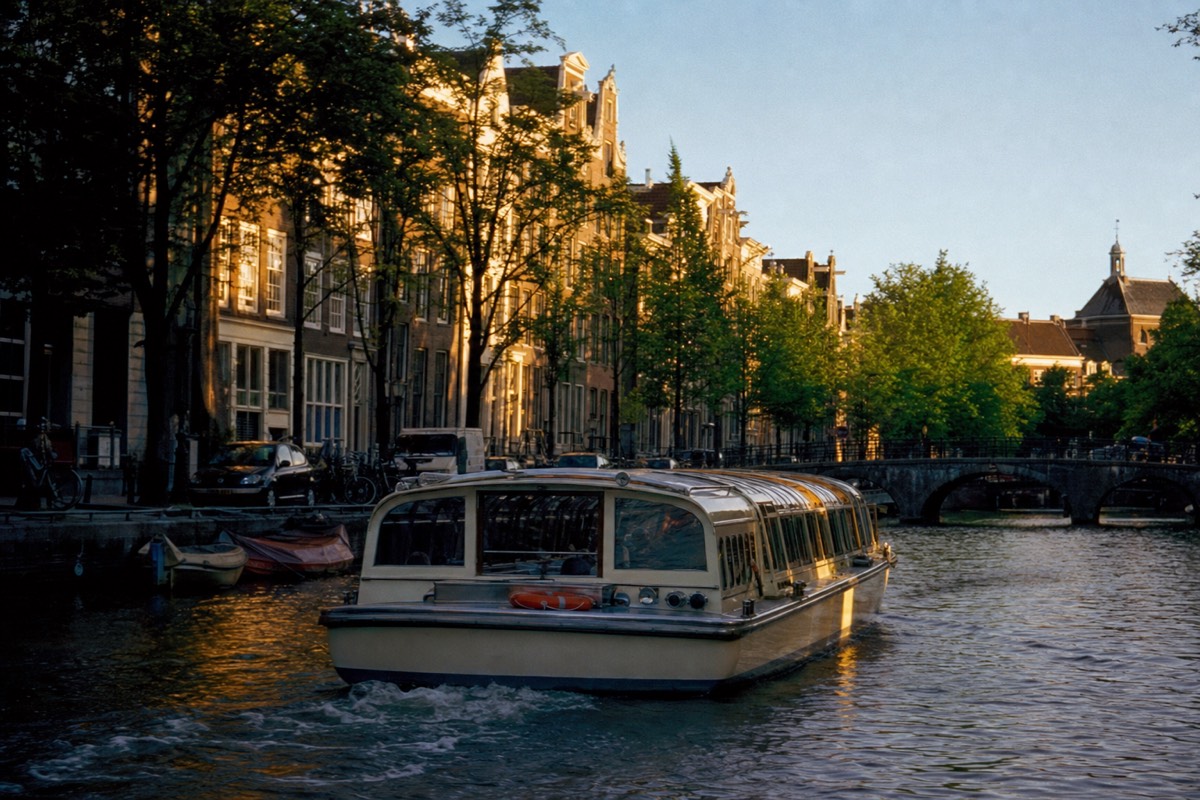
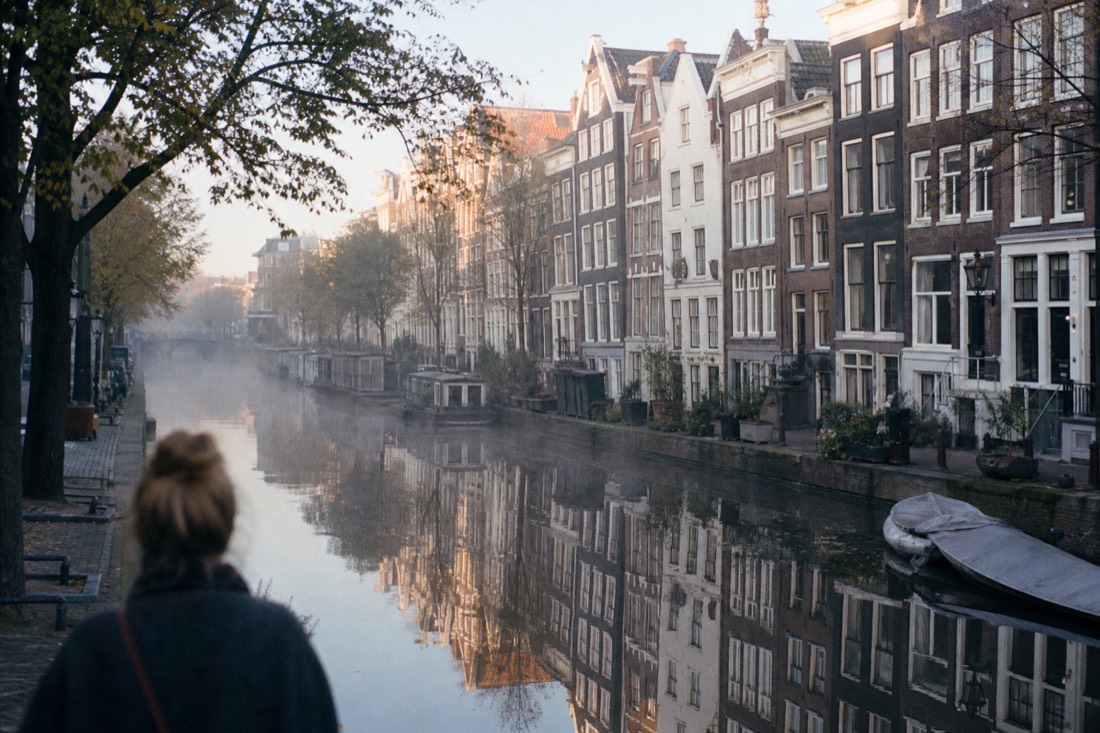
Amsterdam sits far enough north that the sun does something different here than in Rome or Barcelona. In midsummer it stays light astonishingly late into the evening. In December it is dark before the dinner plates are cleared. That single geographic fact shapes every answer about when to cruise, more than any operator's marketing does.
The city also has a lot of water to work with: 165 canals spanning roughly 75 km, crossed by 1,281 bridges counted by the municipality, with an average depth of about 2.6 meters. Boats run on that network from mid-morning until late evening, and the experience at the first departure and the experience at the last one barely resemble each other. The question is not which time is best in the abstract. It is which time matches what you want from the hour you spend on the water.
What is the best time of day for a canal cruise in Amsterdam?
The best time of day for most visitors is the last hour before sunset, when low light hits the canal house gables and the daytime boat traffic has thinned. If you want photographs, go then. If you want quiet and empty decks, go at the first departure of the morning, typically around 09:00 or 10:00.
Those are the two poles, and almost everyone falls into one of them. The evening departure wins on atmosphere: warm light on 17th-century brick, lit bridges, and a city that shifts from work mode to dinner mode as you float. The morning departure wins on calm: fewer boats jostling at the narrow locks, softer light for photography, and a deck where you can actually hear the guide.
The middle of the day is not bad, it is just the most ordinary version of the experience. Between late morning and mid afternoon you get full sun, the heaviest boat traffic, and flat, contrasty light that flattens the facades in photos. If your cruise is a first-taste orientation ride and you plan to spend the rest of the day walking, a midday slot does that job perfectly well. If the cruise is the centerpiece of your day, aim for the edges of it.
One planning note that surprises people: sunset time in Amsterdam swings enormously across the year, from long midsummer evenings to darkness well before the end of a winter workday. An "evening cruise" in winter is a darkness cruise with lit bridges, which is its own kind of beautiful. Check the actual sunset time for your travel dates before you book anything labeled evening or sunset, because the departure window moves by hours, not minutes.
Why do sunset departures get so much attention in Amsterdam?
Sunset cruises get the attention because Amsterdam's canal ring was built for low light: the tall, narrow gabled facades face the water, and when the sun drops, the warm tones hit the brick and the reflections double the effect. The trade-off is that everyone else has figured this out too.
The canal ring, inscribed by UNESCO in 2010, was designed at the end of the 16th century and built mostly during the 17th-century Dutch Golden Age. The three main canals, Herengracht, Keizersgracht and Prinsengracht, were laid out as a concentric ring, and the houses along them were built gable-first toward the water because that was the address that mattered. Herengracht was the prestigious residential canal favored by the wealthiest merchants, Keizersgracht the middle ground, and Prinsengracht the working canal bordering the Jordaan. Four centuries later those design decisions are the reason the sunset cruise exists as a product at all. The architecture was practically built to be photographed from a boat at an angle.
The practical reality is that the sunset window is also the peak booking window. Operators stack departures into it, and in summer the ring can feel like a slow-motion procession. That is not necessarily a dealbreaker. A crowded sunset cruise is still a good cruise, and the boats are spaced by the water authorities, Waternet and the municipality's nautical enforcement unit THOR, which keep traffic orderly. But if you imagined having the canal to yourself at golden hour, adjust that expectation now.
If you want the sunset look without the sunset crowd, there is a workaround: book the departure one slot earlier. In summer the light is already excellent an hour before the actual sunset, and the boat density is noticeably lower. You trade the very last orange sliver of sun for a calmer deck and easier boarding. Most people overvalue that final stretch of light and undervalue the hour before it.
The one-slot-earlier trick also helps with boarding logistics. At the busiest departures, the docks can back up as one boat unloads and the next loads, so the earlier slot tends to move faster from check-in to actually being on the water. The same logic applies to where you sit once aboard: the side facing the gabled facades gets the warm light described above, and on a calmer sailing you have an easier time claiming it. Since the Classic Saloon Boat Cruise with Cheese & Wine runs about an hour, a slightly earlier start still returns you to the dock in the dusk rather than in full dark, which is when the lit bridges look their best.
For a genuinely atmospheric evening, the cheese and wine format is the one that fits the light. The Classic Saloon Boat Cruise with Cheese & Wine from Flagship Amsterdam runs about an hour, holds a 4.6 rating across 26,218 reviews (checked September 2026), and pairs the golden hour with a glass in your hand. You can Check availability for the evening slots, which are the ones that fill first. If you are still deciding which boat style suits you at all, our guide to the best canal cruise to take in Amsterdam breaks the formats down separately from timing.
What is a morning canal cruise actually like?
A morning cruise, meaning the first departures from roughly 09:00 to 10:30, is the quietest version of the experience: fewer boats on the water, emptier decks, and soft directional light that is arguably better for photography than the harsh midday sun.
The canals in the early morning are still partly in city mode rather than tourist mode. Delivery boats and houseboat residents moving between the roughly 2,500 houseboats moored across the city share the water with the first cruise departures. The air is often still, which matters more than you would think: reflections on the canals are only mirror-sharp when the wind is low and boat wakes are few, and the morning is when you get that glassy surface. Photographers who want the classic upside-down Amsterdam shot, houses and bridges doubled in the water, go early for exactly this reason.
The downside is seasonal. In winter, an early departure happens in near-darkness and cold, and Amsterdam mornings from November through February are gray more often than they are golden. The morning strategy is strongest from April through September, when the light arrives early and the temperature on the water is tolerable. In the dark months, flip the plan: sleep in and take the midday or early afternoon slot, when the weak winter sun is at its highest and the city looks least grim.
Morning also suits a specific kind of traveler: the one using the cruise as an orientation for the rest of the day. A 75-minute audio-guide cruise, like the City Canal Cruise from Blue Boat Company, rated 4.4 across 19,764 reviews (checked September 2026), works well as a first-morning activity because you finish by late morning with a mental map of the ring and the whole day still ahead of you. If you are weighing how long to set aside, our piece on how long a typical canal cruise in Amsterdam takes covers the standard durations.
Is a night canal cruise worth it after dark?
A night cruise is worth it if what you want is lit bridges and a cozy cabin rather than sightseeing detail, because after dark you lose the architecture's fine detail and keep only its silhouette and its lights. It is a mood product, not an information product.
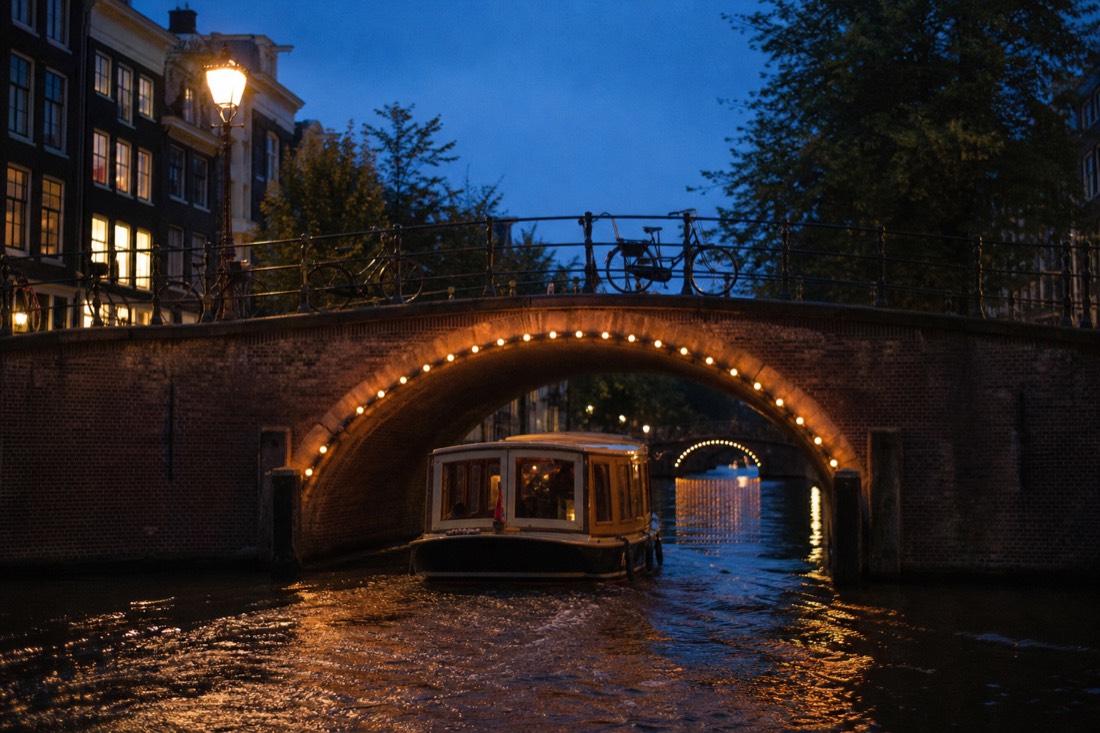
What you see at night is a different city. The gabled facades go dark, but the bridges, many of them lit with strings of warm lamps, become the main event, and the area around Reguliersgracht, one of the most photographed multi-bridge views on the ring, turns into a corridor of light. Boats that feel plain at noon, enclosed saloon vessels with warm interiors, suddenly earn their keep. The evening format with drinks makes sense here: the cruise stops being a tour and starts being a floating table.
The dinner options lean into this. The Original Pizza Dinner Cruise with Drinks from Stromma, rated 4.5 across 2,642 reviews, and the High-End 3-Course Dinner Canal Cruise from Rederij Aemstelland, rated 4.6 across 114 reviews over a 2 hour 15 minute runtime (checked September 2026), are both built for the hours after sunset. The pizza cruise is the casual version, the three-course is the occasion version, and both are better in darkness than they would be at midday, when a dinner cruise mostly means eating while watching joggers.
Two cautions. First, night cruises in midsummer start absurdly late if you want lit bridges, because darkness does not arrive until very late in the evening in June, so a "night cruise" in summer often departs at a reasonable evening hour and ends in twilight rather than true dark. Second, in the dead of winter an early evening departure is already a full night cruise, which is great value if you are not bothered by the cold, since the boats are heated and the light-up season, with the Amsterdam Light Festival installations on the water from late November through January, gives the night cruise a reason to exist that summer cannot match.
How does the season change the best cruise time?
The season changes the answer more than the clock does: from April to September the golden-hour window in the evening is the prime slot, while from November to February the best light is midday and the best atmosphere is after dark, when the bridges and winter light installations are lit.
Spring and summer give you long evenings and the full range of choices. The sunset slot is at its best, the morning slot is genuinely pleasant rather than freezing, and open boats, the small electric vessels that run smaller groups, are comfortable. The trade-off is demand: summer sunset departures are the first to fill, and the most popular formats sell their evening slots days ahead. If you are traveling in July or August and want a specific evening cruise, book it before you leave home rather than from your hotel lobby.
Autumn is the sleeper season for timing. October light in Amsterdam is low and warm even at midday, boat traffic drops sharply after the summer peak, and the sunset slot moves early enough that you can cruise at golden hour and still be at dinner by a civilized hour. If your trip is flexible and your goal is the best light-to-crowd ratio of the year, aim for late September through October.
Winter inverts everything. Daylight is scarce, the sun is low all day, and by late afternoon the city is fully lit. Midday becomes the best sightseeing window because it is the only window with usable light, and the evening becomes the atmosphere window, with heated saloon boats, and from late November the Amsterdam Light Festival route along the Amstel and the ring. A winter evening cruise is honestly one of the better cold-weather activities in the city, and it costs you nothing in comfort if the boat is enclosed.
If you are still deciding whether the cruise is worth it at all before you worry about the hour, we cover that question separately in whether a canal cruise in Amsterdam is worth doing.
Which departure should you book for each part of the day?
Match the format to the hour: the first morning departure for quiet and photography, midday for a cheap orientation ride, the hour before sunset for the best light, and after dark for drinks, dinner or the winter lights. The boat type should follow the time, enclosed for cold evenings, open for warm ones.
Here is how the day maps onto the formats on offer:
| Time window | What you get | Best format for it | Watch out for |
|---|---|---|---|
| First departures, 09:00-10:30 | Calm water, glassy reflections, empty decks | Small open boat or standard cruise | Cold and gray in winter |
| Late morning to mid afternoon | Full sightseeing detail, easy availability | 75-minute audio-guide cruise | Peak boat traffic, flat light |
| Hour before sunset | Warm light on the gables, thinner traffic than the peak | Cheese and wine saloon cruise | Books out first in summer |
| After dark | Lit bridges, cozy cabins, winter light route | Dinner cruise or heated evening cruise | Less architectural detail |
The cheese and wine saloon cruise earns its place in the pre-sunset slot because the format is built around lingering: an hour on a classic boat, a board of Dutch cheese, and a glass while the light drops. The 75-minute city cruise earns the midday slot because it is the workhorse: audio guide in your language, big windows, a route that covers the ring's core, and enough departures across the day that you can grab a seat without planning. The pizza cruise and the three-course dinner cruise own the after-dark row, for reasons the table makes obvious.
A note on booking lead time, since timing and availability are linked: the sunset slots of the popular formats are the ones that disappear, and the midday slots of the big-boat cruises almost never do. If your heart is set on a specific evening, reserve it early, and confirm the operator's cancellation terms on the live listing before you pay, since most allow free cancellation up to a day ahead. Our guide on whether you need to book a canal cruise in advance in Amsterdam goes deeper on lead times by season.
If the pre-sunset cheese and wine slot sounds like your evening, this is the one to lock in first, because its evening departures are the scarcest seats on the ring in high season.
Common questions about timing a canal cruise in Amsterdam
The short answer across every question below: the last hour before sunset is the best all-round slot for light and atmosphere, the first morning departure is best for quiet, midday works fine for a cheap orientation ride, and after dark you are buying mood rather than detail. Season shifts the clock, so check sunset times for your dates before booking.
What is the best time of day to take an Amsterdam canal cruise?
For most visitors, the last hour before sunset, when the light hits the canal house gables and boat traffic is thinner than at the peak. For quiet and photography, take the first morning departure instead, around 09:00 or 10:00.
Is it better to do an Amsterdam canal cruise during the day or at night?
Day for detail, night for mood. In daylight you see the architecture, the houseboats and the street life. After dark you lose that detail but gain lit bridges and cozy cabins, which makes night better suited to drinks and dinner formats than to sightseeing.
What time is sunset in Amsterdam?
It swings enormously across the year at this latitude: light stays until very late in the evening in late June, and darkness arrives before the end of a winter workday in December. Check the actual sunset time for your travel dates before booking anything labeled sunset or evening, because the departure window moves by hours between seasons.
Are morning canal cruises less crowded?
Yes, noticeably. The first departures of the day have fewer boats on the water, emptier decks, and often glass-still reflections, since the wind and the wakes both pick up later. This is strongest from April through September; in winter the mornings are dark and cold.
Do sunset cruises in Amsterdam sell out?
The popular evening formats do, especially from late spring through summer, when the sunset window is short and demand is highest. Midday departures on the large standard cruises rarely sell out. Book evening slots ahead and check the cancellation terms on the operator's live listing.
Is a winter evening canal cruise worth it?
Yes, if the boat is enclosed and heated. From late November through January the Amsterdam Light Festival installs pieces along the water route, the bridges are lit by late afternoon, and a heated saloon boat is one of the more comfortable cold-weather activities in the city.
The short version: pick the hour that matches what the cruise is for. Sightseeing, go early or midday. Atmosphere, go at the edge of the light. Dinner, go after it. And whatever you choose, book the sunset slots early, because everyone else in the city is looking at the same sky. More planning help lives on Amsterdam Canal Cruises.