Is it worth doing a canal cruise in Amsterdam?
An honest look at whether an Amsterdam canal cruise is worth your time and money, what kind of cruise fits which traveler, and when to skip the boat entirely.
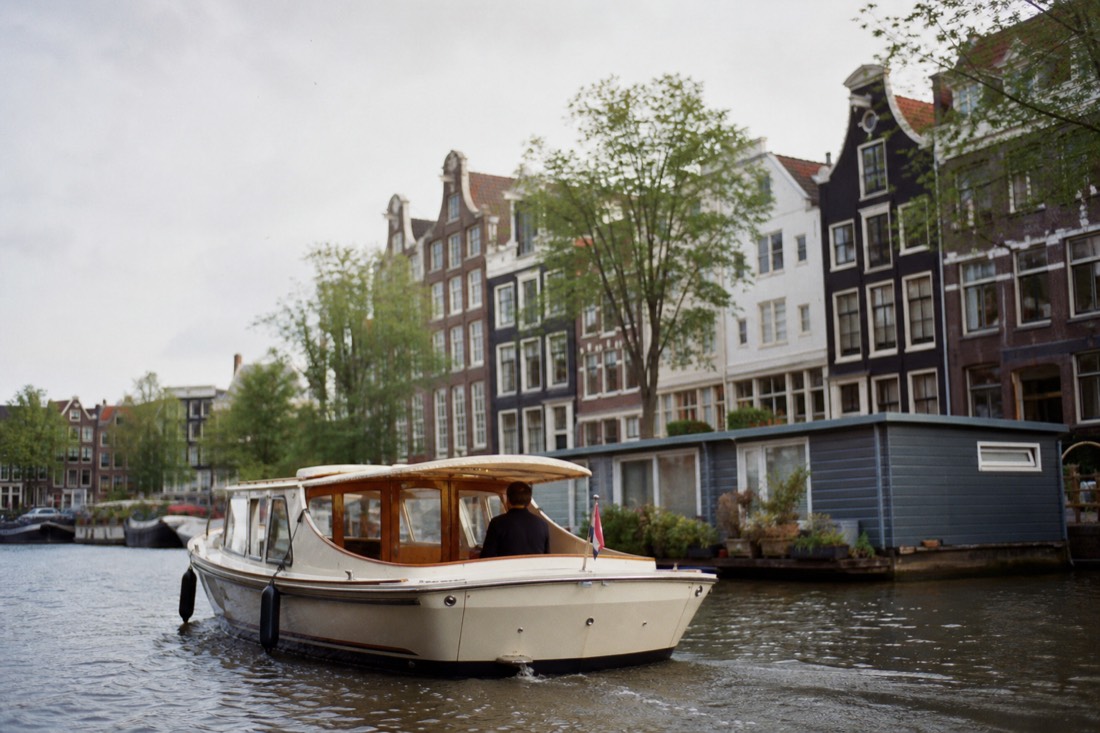
Roughly 26,218 people have left reviews on a single cheese and wine canal cruise in Amsterdam. That is one product, one operator, one hour on the water. The city's canal ring was inscribed on the UNESCO World Heritage List in 2010, and it was built as a planned expansion during the 17th century Dutch Golden Age, which means the thing you are floating through is not a theme park version of history. It is the history. So when people ask whether a canal cruise is worth it, the question is rarely about the canals themselves. It is about the boat, the crowd, the price and the expectation you carry aboard.
The short version: yes, for most first-time visitors, a canal cruise is worth it, and it is one of the few tourist activities in Amsterdam that delivers exactly what the city is famous for. But the difference between a great cruise and a forgettable one is wider than most people realize, and it comes down to picking the right style for your trip rather than grabbing the cheapest ticket at the dock. That is the whole argument of this piece, and it is the same one we make across Amsterdam Canal Cruises: the canals are never the problem, the booking is.
Is it worth doing a canal cruise in Amsterdam?
Yes, for most visitors a canal cruise is worth it, because the canals are the one Amsterdam sight you cannot properly see from the street. The gabled houses, the leaning warehouses, the 1,281 bridges counted by the municipality, all read differently from the water, and a well-chosen one-hour cruise costs less than a museum ticket.
The case for the cruise is simple geometry. Amsterdam's canal ring is a concentric system built around the Singel, Herengracht, Keizersgracht and Prinsengracht, and the most interesting architecture faces the water. From the pavement you see shopfronts and doorways. From a boat you see the crow-stepped gables, the hook beams used to hoist furniture into upper floors, the houseboats, roughly 2,500 of them city-wide, and the backs of 17th-century merchant houses that were designed to be admired from a boat in the first place.
The Herengracht was the prestige canal, laid out with wider plots for the wealthiest merchants. The Prinsengracht was the working canal, lined with warehouses and narrower dwellings along the Jordaan. A cruise route that touches both gives you the city's whole social hierarchy in about an hour, and that contrast is something no walking tour compresses as efficiently. The Keizersgracht sits between them, a middle-ground residential canal with broader houses than the Prinsengracht, and a good route threads all three.
The case against is equally honest. The big standard cruises can feel like a floating tram: packed seats, a recorded audio guide, a route that does not change. If you board one of those at 2pm on a July Saturday with a hangover and a script about the Golden Age droning in your ear, you may well wonder why you paid. That is a real experience some people have, and pretending otherwise would be dishonest.
The fix is not skipping the cruise. It is matching the cruise to the traveler. Below is the honest breakdown of who gets real value and who does not.
If you are still weighing the decision, these are the three styles most first-time visitors compare, and each suits a different kind of day.
Timing matters more than most guides admit. The floating-tram problem described above is at its worst in the early afternoon, so if you are booking a standard large-boat cruise, aim for the first departures of the day or the last ones before dusk, when seats are emptier and the recorded commentary is easier to actually hear. The trade-off is straightforward: big boats run constantly and need no booking ahead, while smaller saloon boats, the style behind the cheese and wine cruise in the data above, carry fewer passengers and a live host instead of a script.
One practical note on routes. Because the interesting architecture faces the water, where you sit changes what you see: grab a window seat on the side facing the gables rather than the street side, and if the boat has an open or glass roof section, take it, since the hook beams and gable tops are directly above you. If your route only covers one or two of the three main canals, the Herengracht and Prinsengracht contrast is the pairing worth prioritizing over the Keizersgracht.
Which type of canal cruise is worth the money?
A cruise is worth the money when the format matches your reason for going: a standard audio-guide cruise for first-timers on a budget, a small saloon boat with drinks for couples and anyone who wants atmosphere, and a dinner cruise only for travelers who want the meal to be the event. Paying for the wrong format is what makes people say a cruise "wasn't worth it."
The standard cruise is the entry point. A product like the 75-minute City Canal Cruise with Audio Guide, run by Blue Boat Company, holds a 4.4 rating across 19,764 reviews (checked September 2026), and its job is to show you the canal ring efficiently with a recorded commentary in your language. It is cheap, frequent and dependable. It is also the format most likely to feel impersonal, because it is built for volume. If your plan is "see the canals once, tick the box, move on," this is the right spend, and it is the one I would point budget travelers and families with older kids toward. Check availability
The saloon boat with drinks is where most people find the sweet spot. These are smaller, often electric boats, and the good ones include something in the ticket. The Classic Saloon Boat Cruise with Cheese & Wine from Flagship Amsterdam, a one-hour trip rated 4.6 across 26,218 reviews (checked September 2026), is the archetype: a small vessel, Dutch cheese, wine, and a route through the same UNESCO-listed ring. The price is on the listing rather than something I will quote here, but the format costs more than the standard cruise and earns it, because the atmosphere is the product. Couples, small friend groups and anyone photographing the trip tend to be happiest here. You can read more about that style in our guide to the best canal cruise to take in Amsterdam.
Dinner cruises are the hardest to recommend universally. The High-End 3-Course Dinner Canal Cruise from Rederij Aemstelland runs 2 hours 15 minutes and carries a 4.6 rating, but from a small pool of just 114 reviews (checked September 2026), so the feedback base is thin compared to the volume products. A dinner cruise is worth it when the meal is the occasion: an anniversary, a birthday, a bad-weather evening when you want a couple of warm hours on the water. It is not worth it as a sightseeing strategy, because you spend half the trip looking at a plate.
There is also a middle category worth knowing about: the small-group open boat with a live local guide. These trade the recorded commentary for a real person telling real stories, usually in a boat of a dozen or so passengers, and they consistently rate at the top of the market. If you have ever zoned out during an audio guide, this is the format that fixes it, and it typically sits in the same price band as the drinks-included saloon boats.
When is a canal cruise not worth it?
A canal cruise is not worth it if you only have a few hours in the city and would rather walk the Jordaan, if you are prone to motion discomfort on small boats in busy wakes, or if you book a high-volume departure at peak time and expect intimacy. The failure is usually in the booking, not the canals.
Timing matters more than most guides admit. The area around Reguliersgracht is one of the most photographed multi-bridge views along the canal ring, and in summer that means boats stack up at the scenic corners. A mid-morning or late-afternoon departure gives you calmer water and better light. If you want the deeper timing breakdown, we cover it in the best time of day to take an Amsterdam canal cruise.
Peak-season Saturdays are the worst-case scenario: full boats, queued docks, and a guide racing the schedule. Winter is the underrated window. Fewer boats run, the light is low and dramatic, and several operators run heated vessels, including a heated cruise with unlimited drinks and a bite from Flagship Amsterdam rated 4.5 across 19,995 reviews (checked September 2026). Cold-weather Amsterdam from a warm boat with a drink is a genuinely good product that most visitors never consider because they assume boats are a summer thing.
The other honest skip conditions: if you get seasick easily, a small open boat in a busy canal with wakes from passing vessels will test you, and a larger covered saloon boat is the better choice. If your trip is a short stopover and you are choosing between the canals and, say, the Rijksmuseum, walk the Prinsengracht instead and save the cruise for a longer visit. And if you are hoping for a private, quiet experience, do not book the volume products at all, because no amount of good reviews changes the fact that you are sharing the boat with forty strangers.
For travelers who want the view without the crowd problem, the small-group format is the compromise worth paying for.
How much does a canal cruise cost versus what you get?
Typical canal cruise prices run from about $19 to $47 per person (checked September 2026) for one-to-90-minute tours, with standard one-hour cruises clustering between $20 and $50, and dinner and private options commanding clear premiums. The value calculation is simple: the standard cruise buys you the view, while the premium formats buy you the view plus atmosphere you cannot get from the pavement. (checked September 2026) (checked September 2026)
Prices shift constantly with season and demand, so treat these as planning ranges and confirm the live figure when you book. What does not change is the structure of the market, which two independent sweeps of the current listings summarized as standard one-hour cruises clustering around the low end, and dinner and private options commanding clear premiums that sell best for evenings and special occasions.
| Cruise style | Typical duration | What you get | Best for |
|---|---|---|---|
| Standard audio-guide cruise | 60-75 minutes | Recorded commentary, covered boat, entry-level price | First-timers, budget travelers |
| Small open or saloon boat, local guide | 60-90 minutes | Live guide, small group, mid-range price | Travelers who want stories, not headphones |
| Cheese and wine cruise | 60-75 minutes | Dutch cheese, drinks included, small vessel | Couples, food-leaning visitors |
| Heated cruise with unlimited drinks | 60-90 minutes | Warm cabin, open bar, a bite to eat | Winter trips, bad-weather days |
| 3-course dinner cruise | 2 hours 15 minutes plus | Full meal service, premium price | Occasions, anniversaries |
The pattern worth noticing: the jump from standard to cheese-and-wine is small in absolute terms and large in experience. You can dig into the full price picture in how much a canal cruise costs in Amsterdam, including why the cheapest ticket is not always the cheapest trip once you add a drink bought onboard.
One thing that is genuinely free: walking the canal ring itself. There is no free canal cruise in Amsterdam in any reliable sense, and the "free" tickets occasionally advertised are tied to purchases or promotions, but the pavement along the Herengracht and the Prinsengracht costs nothing and is the best free thing in the city. The boat earns its money by showing you what the pavement cannot: the waterline view the merchant classes designed their houses for.
What do the reviews actually say about canal cruises?
The review data is unusually strong: the leading cheese and wine cruise holds 4.6 from 26,218 reviews, the standard 75-minute cruise holds 4.4 from 19,764, and the pizza dinner cruise holds 4.5 from 2,642, which means the volume products are among the most consistently validated tourist experiences in the city. (checked September 2026)
That matters because Amsterdam has no shortage of overhyped activities with thin or noisy feedback. A four-point-something rating on a few hundred reviews tells you little. The same rating across twenty thousand tells you the product is repeatable, that it delivers the same hour to different people on different days. It is the closest thing the tourism industry has to a controlled experiment.
The complaints, where they exist, cluster predictably. Crowding at peak times. Audio guides that feel canned. Weather, which no operator controls. What you almost never see is a reviewer saying the canals were boring, because the canals are the one variable that never disappoints. The Seventeenth-Century Canal Ring inside the Singelgracht has been a World Heritage site since 2010, and the design dates to the end of the 16th century as a deliberate, planned expansion. You are floating through one of the few World Heritage sites that was engineered as a single vision and still functions as a working neighborhood.
The evening products deserve a mention here. The sunset cruise from Eco Boats Amsterdam runs about an hour with optional drinks, and the listing currently carries a "top rated" badge and notes it was booked 193 times yesterday, which is a useful signal about how demand concentrates around golden hour. Evening is also when the bridges and gables light up, and the argument for day versus night has real substance on both sides, which we break down in day or night canal cruise.
So, is a canal cruise in Amsterdam worth it? The honest verdict
For a first visit of two days or more, yes, book one cruise and treat it as a core sight, not an add-on. For a repeat visit, only if you never did an evening or dinner format. For a one-day stopover, walk the canals and save the boat for next time. The single biggest predictor of satisfaction is not price, it is whether the format matched the reason you boarded.
My practical recommendation, having looked at the whole current lineup: first-timers should take one small-boat cruise with drinks included, in the late afternoon, on a weekday if the schedule allows. That single choice combines the best light, the calmest water, and the format where the atmosphere is part of the ticket. The Classic Saloon Boat Cruise with Cheese & Wine is the product most travelers describe as the highlight of their trip rather than a box ticked, and the review volume behind it backs that up.
If your budget only stretches to the standard cruise, take it anyway. A 4.4-rated, 75-minute audio-guide trip through a UNESCO-listed canal ring is one of the better deals in European sightseeing, and regret is far more common among visitors who skipped the water entirely than among those who took the cheap boat. The people who leave Amsterdam disappointed are, almost without exception, the ones who saw the canals only from the side.
Common questions about canal cruises in Amsterdam
A canal cruise is worth it for most visitors because the UNESCO-listed canal ring reads best from the water, the volume products carry strong ratings across tens of thousands of reviews, and prices start low enough to treat the trip as a core sight rather than a splurge. These are the questions travelers ask most.
Is it worth doing a canal cruise in Amsterdam?
Yes, for most visitors. The canal ring is a UNESCO World Heritage site, the most interesting architecture faces the water, and even the standard cruises cost less than a major museum. The value depends on matching the cruise style, standard, drinks-included or dinner, to your reason for going.
How long is a typical canal cruise in Amsterdam?
Most cruises run about one hour, with standard products ranging from one hour to 90 minutes and dinner cruises running two hours or more. The classic cheese and wine cruise is one hour; the standard city cruise is 75 minutes.
Do you need to book a canal cruise in advance in Amsterdam?
In high season, yes. Popular departures sell out, and at least one evening cruise listing currently notes it was booked 193 times in a single day. Booking ahead also lets you pick your departure time and boat style rather than taking whatever is left at the dock.
Is a canal cruise better in the day or at night?
Day cruises show you the architecture and gable detail; evening cruises show you the lit bridges and a quieter, more romantic city. Both work, which is why the format matters more than the hour for most travelers.
Can you see the Amsterdam canals without taking a cruise?
Partly. Walking the Prinsengracht and the Jordaan is free and excellent, but the waterline view of the gabled houses, warehouses and houseboats is something the street genuinely cannot give you. That is the core case for the cruise.
Are Amsterdam canal cruises crowded?
The volume products can be, especially on summer weekends at midday. Smaller saloon and open-boat cruises cap their numbers far lower, and off-peak departures, early morning, late afternoon, or winter, run noticeably calmer.