Is it better to cruise Amsterdam's canals during the day or at night?
Day or night: which Amsterdam canal cruise is better? An honest comparison of light, crowds, photos, and atmosphere, with picks for each.
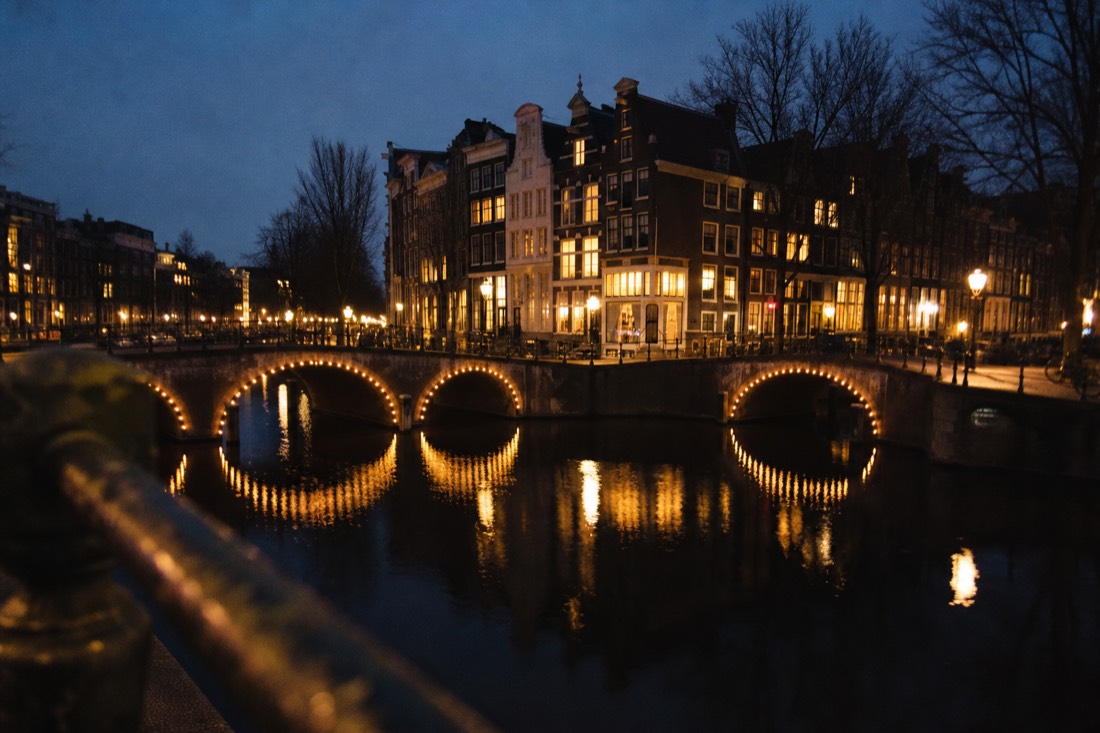
The Seventeenth-Century Canal Ring Area of Amsterdam inside the Singelgracht has been on the UNESCO World Heritage List since 2010, and that is the stretch almost every cruise covers: the Singel, Herengracht, Keizersgracht and Prinsengracht. What UNESCO does not tell you is that the same 75 kilometres of water read like two entirely different cities depending on when your boat pushes off. By day you get gable stones, merchant house facades, and the working texture of the Prinsengracht. After dark the architecture disappears into silhouette and the canals turn into a corridor of lit bridges and reflected windows.
This question, day or night, is really three smaller questions wearing one coat. What do you want to see? What do you want to feel? And what kind of boat do you want to be sitting on while both happen? We will take them one at a time, and by the end you should know exactly which departure slot fits your trip.
Is it better to cruise Amsterdam's canals during the day or at night?
For most first-time visitors, a late afternoon or early evening cruise is the best single choice, because it delivers daylight for photos and the lit-bridge atmosphere as the sun drops. If your priority is architecture and detail, go midday. If your priority is atmosphere, drinks, and romance, go after dark. The canal ring itself is the same either way; the experience is not.
That answer sounds like a dodge, so let me defend it. Amsterdam sits far enough north that summer evenings stay light until very late, which means a cruise departing around 8 or 9pm in June can still give you an hour of golden light before the city lights take over. In December the opposite happens: a 4pm departure is already a night cruise. The calendar matters as much as the clock, and honestly more than most guidebooks admit.
There is also a practical split. Daytime departures are the domain of the big-audience sightseeing boats, the ones with audio guides running in a dozen languages. Evening departures skew toward smaller vessels, drinks on board, and operators who lean into the mood rather than the commentary. The Classic Saloon Boat Cruise with Cheese & Wine from Flagship Amsterdam is a good example of the evening temperament: a covered classic boat, cheese and wine, an hour on the water, rated 4.6 across 26,218 reviews (checked September 2026). It is the kind of product that makes more sense once the sun is low, and the kind of product that a lot of visitors end up remembering more than the museum they queued for.
If you are still deciding, these three cover the day, the evening, and the dinner-in-between:
A quick note on what "better" even means here. The three main canals were built with distinct characters: the Herengracht was the prestigious residential canal for the wealthiest merchants, the Keizersgracht was the middle-ground residential canal, and the Prinsengracht was the working canal with warehouses along the Jordaan. Daylight shows you those differences in brick and plot width. Darkness flattens them into one continuous glow, which is beautiful but anonymous. If you care about the history, that is an argument for daylight. If you care about the mood, darkness wins, and it is not a close contest.
What does a daytime canal cruise actually give you?
A daytime cruise gives you detail: gable stones, facade ornament, the differences between the three main canals, houseboat life, and the full 1,281-bridge network in plain view. It is the version of the cruise that doubles as a sightseeing tour. You see the city; at night you mostly feel it.
Start with the facades. Amsterdam's canal houses are narrow, tall, and crowned with distinctive gables, and the differences between bell, neck, and step gables are visible only when light is hitting the brick. From the water, at midday, you can read the hooks at the roofline that residents still use to hoist furniture through windows, because staircases in these houses were built too steep and too narrow for anything larger than a person. That detail, the beam and hook, is one of the small facts that makes the canal ring feel like a working city rather than a postcard, and you will not see it after sunset. You will also miss the warehouse markers on the Prinsengracht, the loading doors that open directly onto the water, which only make sense as architecture when you can see them.
Daylight also shows you the houseboats. Roughly 2,500 houseboats sit on Amsterdam's canals city-wide, with somewhere between 750 and 900 concentrated in the Singel area depending on how the count is scoped. In daytime you see the gardens on their roofs, the bicycles lashed to their rails, the curtains in their windows, the flower boxes, the cats asleep on the decks. At night they become rectangles of light like everything else, and you lose the sense that several thousand people live on this water permanently, which is one of the more surprising facts about the city and one that daylight delivers for free.
Then there is the photography argument. The area around Reguliersgracht is one of the most photographed multi-bridge views along the canal ring, a stack of bridges receding in a line down the water. That shot works in daylight. It also works at night, differently, with each bridge lamp reflected, but the daytime version is the one where you can see the frames of the bridges rather than just their lamps. If your camera is the point of the trip, plan around light, not around atmosphere, and plan to be on the water when the sun is high enough to reach the facades.
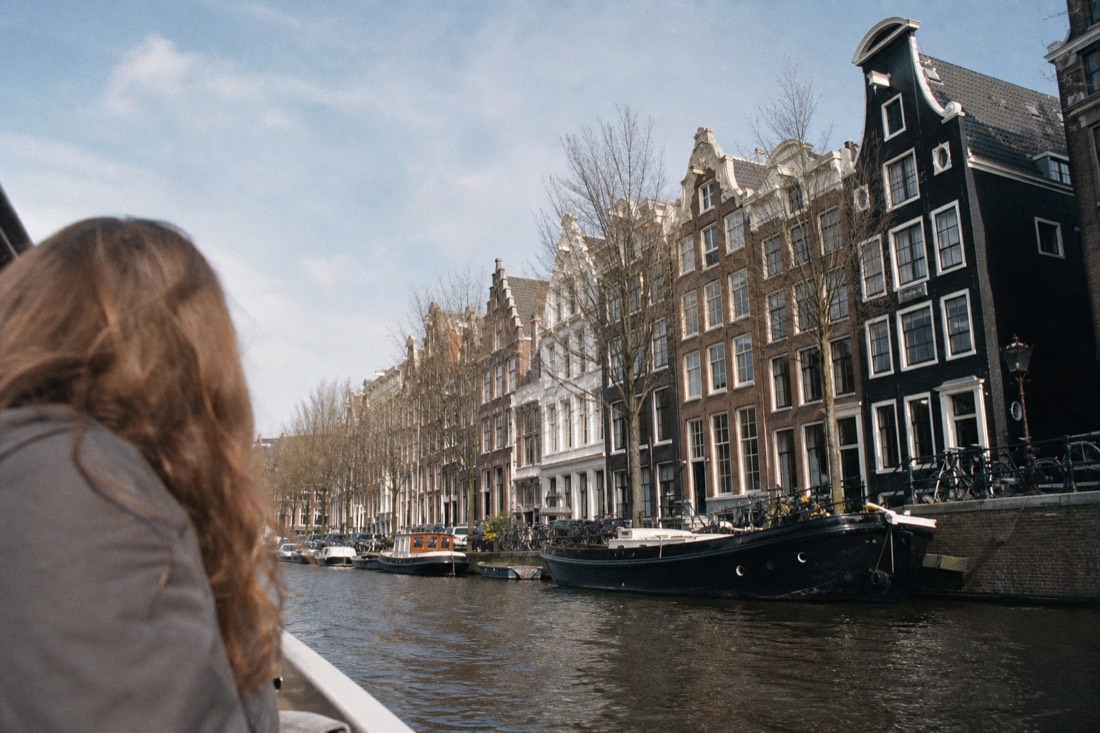
The trade-off is crowds. Daytime is when the canal ring is busiest with boat traffic, and Waternet and the Municipality's nautical enforcement unit, THOR, actively supervise that traffic on the city's inland waters. In practice this means your daytime cruise will share the water with more boats, and your photos will sometimes include other people's boats whether you wanted them or not. The audio-guide cruises, like the 75-minute City Canal Cruise with an audio guide from Blue Boat Company, rated 4.4 across 19,764 reviews (checked September 2026), are built for exactly this: a steady daytime circuit with commentary filling in the history while the traffic flows around you. The commentary does the heavy lifting that daylight alone cannot, because a facade is just a facade until someone tells you why the hook is up there.
One more daytime advantage that nobody puts in the brochure: the water itself. Amsterdam's canals average about 2.6 metres deep, and the surface reads completely differently at noon, when you can often see down toward the sediment and the odd bicycle silhouette, than it does at night, when it becomes a black mirror. It is a small thing, but it changes how the city looks from the deck, and it is the difference between watching a city and floating through a painting.
A few practical points follow from all this. Because the detail you are after sits high on the buildings, your seat matters more than you might expect: an open deck or a boat with a glass roof you can see through gives you the gables, while a low enclosed cabin can cut them off at the roofline. Timing within the day matters too. The busiest stretch of boat traffic coincides with the middle of the day, so if you want the light without the thickest traffic, a morning departure is usually the better trade, since the sun is already high enough to reach the brick while the water is calmer. In winter the same logic applies with more urgency, because the daylight window is narrow and an afternoon departure can leave you finishing in the dark. In summer the opposite problem appears, since evenings stay light so late that a "night" cruise may still be a daylight cruise in all but name, which is worth checking before you book if atmosphere is what you are after.
For a rough comparison, here is how the two slots stack up:
| Factor | Daytime cruise | Evening / night cruise |
|---|---|---|
| What you see | Facades, gables, houseboat life, canal-to-canal differences | Silhouettes, lit bridges, reflected windows |
| Boat traffic | Busiest; more boats sharing the water | Thins out after the dinner hour |
| Commentary | Audio guides and live guides dominate | Less commentary, more mood |
| Photography | Architectural detail, the Reguliersgracht bridge stack | Reflections, warm window light |
| Seasonal swing | Winter days are short; light window is narrow | Summer evenings stay light very late |
| Typical style | Larger sightseeing boats, audio guide | Smaller boats, drinks, saloon boats |
What makes an evening canal cruise different?
An evening cruise trades detail for atmosphere: the bridges light up, the facades become silhouettes, boat traffic thins, and the experience shifts from sightseeing to something closer to a dinner or a drinks outing. It is the better choice for couples, groups, and anyone who has already seen the canal ring in daylight.
The transformation is genuinely dramatic, and it is not gradual. Amsterdam's bridge lighting comes on in a wave, and once it does the canal ring stops being an open-air museum and becomes a corridor of light. The Herengracht, Keizersgracht and Prinsengracht all carry lamps, and from the water the effect is of floating through a tunnel of warm points, each one doubled in the reflection below. The average canal depth of about 2.6 metres gives the water enough body that reflections hold their shape instead of breaking up into ripples, which is why the night canal ring photographs so well from a slow-moving deck.
Evening is also when the food-and-drink cruises come into their own. The Original Pizza Dinner Cruise with Drinks from Stromma Netherlands, rated 4.5 across 2,642 reviews (checked September 2026), is exactly what it sounds like: pizza and drinks on the canals after dark. The High-End 3-Course Dinner Canal Cruise from Rederij Aemstelland, rated 4.6, runs about two hours and fifteen minutes, long enough for a full meal to unfold between bridges. Neither of these products makes sense at noon. A pizza cruise in full daylight is just lunch with a slow commute; after dark it is the whole evening, and the pace of the service matches the pace of the city once the offices empty out.
There is a scheduling trick worth knowing here. Because Amsterdam is far enough north, the summer sunset is late, which means you can book an evening cruise in June and still get a stretch of daylight before the lamps take over. In winter, the reverse: book a late-afternoon slot in December and you will get a night cruise with a check-in in the light. If you want the transition specifically, the hour around dusk, look for departures timed near local sunset rather than a fixed clock time. Operators list their departure slots on their live listings, and the sunset edge moves by several minutes a week, so a departure that caught full darkness last month might still be in daylight this month.
Should you worry about cold? Evening boats in Amsterdam are mostly covered or heated for the winter season, and the saloon boat style, a classic covered vessel with windows, exists precisely because the Dutch climate does not promise a warm evening. If you are cruising between October and March, check the listing for whether the boat is enclosed before you assume you will be on an open deck. The wind on the water is real even in July, so a layer is never a bad call on a night departure.
Which cruise should you actually book for each?
If you want one cruise and one cruise only, book a late-afternoon or sunset departure on a covered boat with drinks, so you get daylight and the lit bridges in a single hour. If you have time for two, do a daytime audio-guide cruise for the architecture and an evening cruise for the mood, in that order.
The one-cruise recommendation deserves a sentence of honesty about why it works. The transition hour is the only time the canal ring gives you both halves of its personality, and it is also when boat traffic is already thinning while the light is still usable. The Classic Saloon Boat Cruise with Cheese & Wine is the archetype of this slot: a one-hour covered cruise with drinks and a tasting board, rated 4.6 across 26,218 reviews (checked September 2026), and the kind of product that works at 5pm in November and 8pm in July equally well. Its price is on the listing rather than quoted here, and the operator's live listing is where you should confirm the departure times for your dates before you build your evening around it.
The two-cruise approach is what I would suggest for a first visit of three days or more. Day one or two, take a standard sightseeing cruise in daylight and let the audio guide do the orientation; you will come away knowing the Herengracht from the Prinsengracht and roughly where the Jordaan sits. Then, later in the trip, take an evening cruise with drinks and no commentary at all, and just watch the city light up. Doing them in the reverse order wastes the evening cruise, because the lit-bridge show is more affecting once you know what you are looking at in silhouette. A gable you learned about on Tuesday is a shape you recognize on Thursday, and recognition is what turns a pretty view into a place.
There is a third pattern worth naming, mostly for people who have cruised the canals before. If you have already done the classic circuit, skip the standard boat entirely and go straight to the specialist products: the dinner cruises, the small-group open-boat tours, the heated cruises with unlimited drinks. The canal ring has 165 canals totalling about 75 kilometres, but the standard cruise route only covers a fraction of that, and the evening products often wander differently than the daytime circuit does. Repeat cruisers are usually surprised by how much water the dinner boats cover, because a two-hour seating has time to reach stretches the one-hour circuit never touches.
If you are still weighing the decision, these three are the slots most visitors end up comparing:
One planning note that applies to both day and night: booking ahead matters more in high season and around the dinner hours. The evening slots sell first because there are fewer of them, and the dinner cruises run on fixed seatings rather than continuous departures. Our guide on whether you need to book a canal cruise in advance covers the timing in detail, but the short version is that a summer evening cruise booked on the day is a gamble. If price is what is actually driving the decision rather than light or mood, see how much a canal cruise costs in Amsterdam, since evening and dinner departures generally sit at a different price point than the standard daytime circuit. The full lineup of real, currently bookable cruises is compared on Amsterdam Canal Cruises, if you want to see every option side by side before picking a time slot.
Common questions about daytime versus evening cruises
Most visitors are best served by a late-afternoon or sunset departure, which delivers usable daylight and the lit bridges in one hour. Midday wins for architecture and detail, full night wins for atmosphere, drinks and romance, and the right choice depends on which of those you would regret missing more.
Is it better to do an Amsterdam canal cruise during day or night?
For most visitors, a late afternoon or early evening departure is the best single choice, because it gives you usable daylight for photos and the lit-bridge atmosphere as the sun drops. Choose midday if architecture and detail are the priority, and full night if atmosphere, drinks and romance are.
Are Amsterdam's bridges lit at night?
Yes. The bridge lighting across the canal ring comes on around dusk, and from the water the effect is a corridor of lamps doubled in the reflections. The Reguliersgracht bridge stack is one of the most photographed views in both its daytime and night versions.
Is a night canal cruise cold, even in summer?
Evenings on the water run cooler than street level, and from autumn through spring most operators use covered or heated boats. Check the operator's live listing to confirm whether your boat is enclosed before assuming an open deck.
Do dinner cruises run in daylight too?
Sometimes, but the fixed seatings are built around the evening. In midwinter, a 5pm dinner cruise will start in the dark; in June it may start in full daylight. The product is the same, the mood is not, so check local sunset times for your dates.
Which is better for photos, day or night?
Daylight wins for architectural detail, gables and the bridge views; night wins for reflections and warm window light. The transition hour around dusk is the only slot that reliably gives you both in one cruise.
Can you see anything from the boat at night?
You see silhouettes, lit facades, bridge lamps and reflections rather than architectural detail. If it is your first cruise and you want to learn the layout of the canal ring, do a daylight cruise first and save the night cruise for later in your trip.